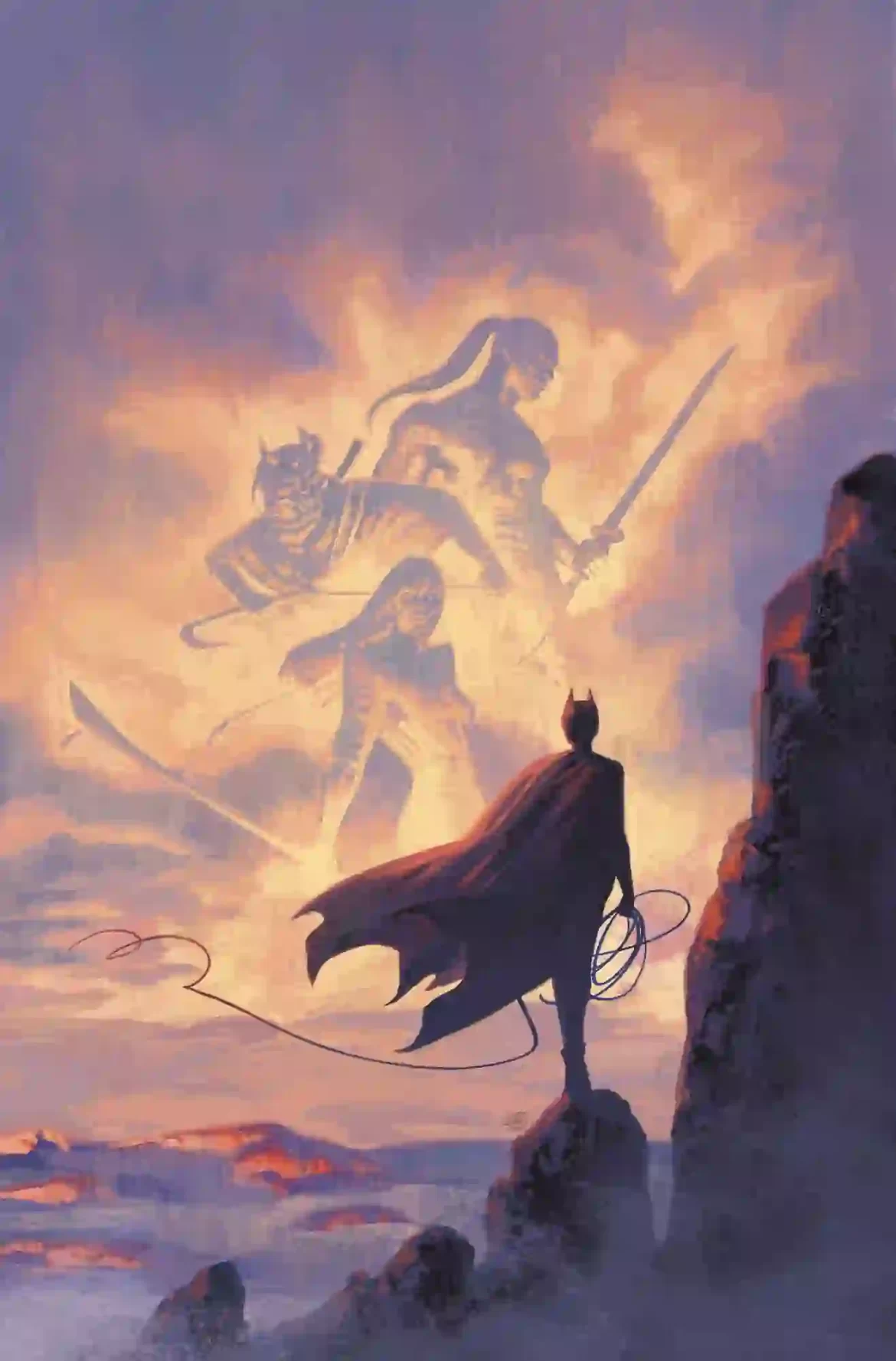
In this review of Batgirl #11, it’s one deadly assassin after another as Batgirl and Jade Tiger fight the descendent from the Blood Clan!

Batgirl #11 main cover by David Talaski (DC Comics)
BATGIRL #11
Written by TATE BROMBAL
Art by TAKESHI MIYAZAWA
Main Cover: DAVID TALASKI
Variant Cover: SAOWEE
Page Count: 32 pages
Release Date: 9/3/25
This review contains spoilers
Batgirl #11 begins as Wu Bing, descendent of the Blood – and relative of the family Wu and Cassandra’s cousin – has arrive on Richard Dragon’s ranch to offer Cass a place in the restructuring of the Blood Clan. Her abilities consist of hemokinesis, Blood Manipulation, a power she acquired after making a blood sacrifice with evil spirits. She informs Cass that she too can be trained in blood manipulation, and with her added skills will instruct an army of soldiers of their clan. Needless to say, Cassandra isn’t eager to join up with a bunch of killers now, and the two start fighting.
Tenji wants to help, but his father Bronze Tiger holds him back. Tenji kicks his father, angry that he’s been lied to for so much of his life, and joins Batgirl against Wu Bing. Bronze Tiger sees the two of them together and gets flashbacks to both his younger days with Richard Dragon and also Shiva and Carolyn together.
When Wu Bing gets a hit on Tenji, Cassandra loses her cool and beats her through the cabin’s walls, pounding her into the ground outside. Despite all of the blood attacks thrown at her, Batgirl subdues Wu Bing and is held by by Bronze Tiger before going further. Wu Bing rises to her feet and realizes she can’t beat Cass, so she releases the evil spirits within her as penance for her failure.
Just as she disappears, a masked swordswoman arrives in her place. This is Jaya Jayesh, daughter of the ally of Shiva who sacrificed himself for Cass issues earlier. She informs Cass that Nyssa has been reforming the League of Assassins, and Batgirl is invited to join. Batgirl agrees only to repay her father’s debt to him, and Bronze Tiger informs Tenji that he’s allowed to go as well. He expresses regret at holding Tenji back and gifts him with spiked knuckles. as well as Shiva’s sword to Cassandra. The two join Jaya in heading towards the League of Assassins on horseback.
Analysis
Starting with the positives of Batgirl #11, what I liked about this arc is how Cass’ skills have been on true display every issue, with every fight. In the first half of this series with Shiva, she was either getting knocked around or running away, and that shouldn’t be a recurring quality of a Cassandra Cain book. Not unless we want for her to run away, if she’s up against truly insurmountable odds. There was too much telling over showing with the Unburied, and while I bought that she was outclassed, it was still frustrating for her continued running away to be the rhythm of the book. That’s not been the case here, where master after master has attacked, and Batgirl has been handling them with hardly any problems. I also like how she’s been totally masked for the majority of this arc, with her costume only getting damaged after she’s lost her cool near the end. Some very straightforward Cassandra Cain butt-kicking has been the minimum positive floor for me in reading this series for the past few months. Takeshi Miyazawa’s artwork really shines in this most recent fight as well. Batgirl just looks badass throughout, and he does a battle-damaged Cass exactly how she should be rendered, notably hurt but still fearsome.
Unfortunately this arc continues the melodrama of an undisciplined outcry of emotion that’s been dragging this book down for far too long. It’s not been since issue #5 where I truly reveled in reading this comic, and although the Book of Shiva was fun when it dug into the Richard Dragon Kung-Fu Fighter lore, this three part barn arc which we’ve been subjected too for three months has been the series low point. We are now three for three in characters yelling at each other and lashing out, just to highlight how torn up they are inside. It’s more than unsubtle, it’s wearying to read. Issue #9 had Batgirl hit Bronze Tiger and call him a coward, last issue had Tiger destroy a wooden dummy, yelling he never wanted Tenji to end up like Batgirl, and in Batgirl #11 Tenji yells and kicks his dad for “raising him to be docile”.
Of the three, teenage Tenji would be the most tolerable in violent outbursts, but the fact that it’s happened three times in a row to me underlines not that the stakes are that high or that our characters are that high-strung, but that Tate Brombal has that limited of an imagination in how to render who these people are when they get frustrated. Yelling and hitting someone who’s meant to be a family member or an ally is the superhero comic book equivalent to someone throwing wine in a person’s face in a sitcom – we’re way past this level of trite storytelling.
I’m spending a lot of time on this detail, as it’s endemic to the problem with the entire series right now. Cassandra Cain is a character who embodies loud, violent action in an almost soft and quiet manner. For the longest time she couldn’t speak, and fights through her mastery of reading body language. Going by those skills, her series was defined by fast but silent action and characterization that made the reader work to figure out what she was thinking and what she would do next. It’s why she’s garnered so many fans, because due to the circumstances of her upbringing, she’s unlike every other Batman character. For her and the people in her world to then be presented with very clichéd, loud and well worn comic book tropes such as speaking of honor, groaning on and on about violence and death and yelling at each other about the frustrations in their own hearts…it ends up being the complete opposite of what makes these characters cool.
I also find that how Brombal writes Cassandra’s relationship to death and violence to be across the street from how we’ve come to understand her over the years. Cass loses her cool at the sight of Tenji taking a hit from Wu Bing, and goes nuts at the thought of another person dying, whaling on Wu Bing and her worn down mask revealing a crazed face underneath. Emotionally, this isn’t out of line. The underlying arc in these past three issue is Cass dealing with the death of Shiva, unsure of her own feelings. That Cass fights at maximum power, and her torn mask reveals how crazy she looks works well. The problem is that she’s way too intuitive to her own emotions, reacting in real time with perfect clarity and vocalizing it whenever there’s a stop in the action.
But the action keeps coming, there’s not a moment where we sit on the defeat of Wu Bing long enough to understand that she’s been defeated. So Cass’ emotional hang-ups and distractions feel out of character, because she’s not focused enough on the fight, and she recognizes that – but she shouldn’t. Now this isn’t 17 year old Cassandra Cain from the year 2000 anymore, she’s gone through enough development to change. At no point are we returning to her death wish, for example. But if this internalized emotional comprehension signals development in her character, why doesn’t it feel recognized by either the character or writer?
The answer is because this is theoretically how characters should act in these kinds of emotional moments. Except Cass’ upbringing so specifically affected her emotional and social intelligence, that anything typical or common found in other people registers as wrong for her. Thus she ends up doing similar things with other characters, such as having violent emotional outbursts like the ones we’ve been seeing for three issues in a row now.
There’s also the problem of Cass moving from hating Shiva to learning more about her to mourning and fighting in anger because of her, all within a couple of days. That we’re not sitting with her, reacting to these feelings, feels as though she’s a cypher for information about Shiva, rather than Shiva being a cypher for new information of Cassandra’s character development. All we know now is that Cass can go from hating the killer who was her mother to mourning her because her Mom’s life was real tough and she’s dead now. What is there left for us to react to beyond those facts of the story? Is Cassandra any different now that she’s learned of Shiva’s backstory? Does she see herself any different? Will she comport herself differently when she returns to Gotham (which can’t come soon enough)?
I also think Jaya Jayesh’s reasons for getting Cass to the League of Assassins was thin and could’ve come later on. Batgirl’s barely had time to sit with the revelation that she has a half brother. Even if she owes her father a debt, it feels like we’re stuck on this assassin storyline despite trying to move on each arc.
There’s other things I could mention, like the Bronze Tiger and David Cain flashback, and Bronze Tiger deciding that everything’s okay now and his underaged teenage son can go into a den of trained killers despite winning no fights since we’ve been introduced to him, but I’ve been harping on Batgirl #11 enough. The Batgirl fighting was my entire positive for it (and the artwork), but it did hold it up a great amount. But I’m not seeing any way out of this morass of basic characterization of the people in this book. My only hope for next issue is that when someone gets upset, they keep their hands to themselves until the conflict is over.
